How Valentine Strengthens Its Security Posture with Fortuna Cysec’s Managed IT Security Services
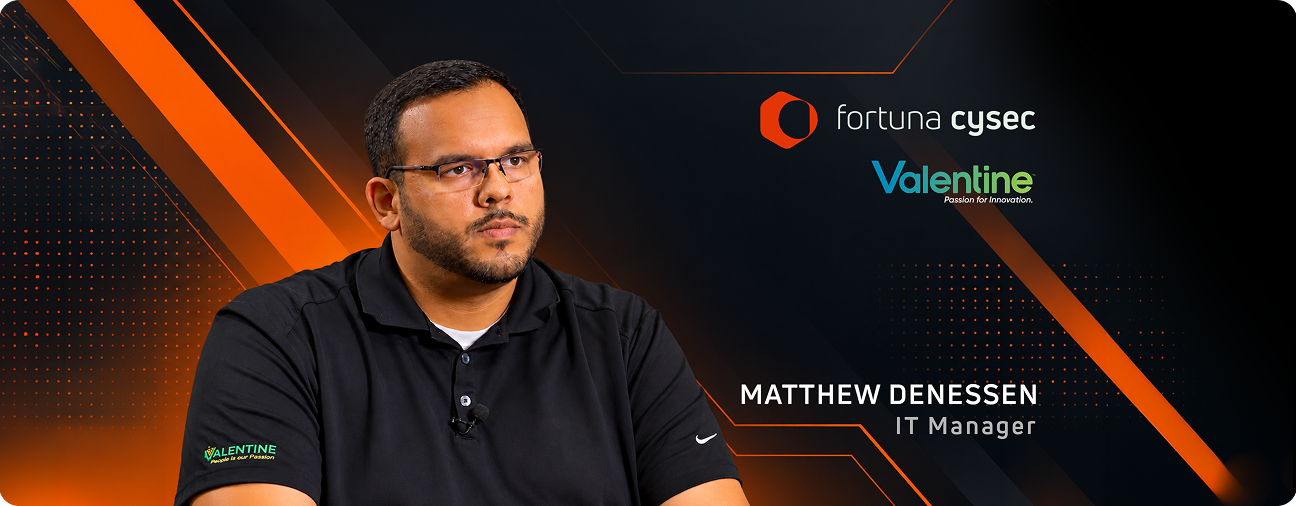

Fortuna Cysec Delivers Scaled Third-Party Risk Management Services for Global Health Tech
ATLANTA, Aug 2026 -- Fortuna Cysec, a global cybersecurity company offering integrated AI-native security operations managed detection and response, continuous threat exposure management and compliance services, today announced it has been selected to provide Third-Party Risk Management services for a leading global health technology company focused on improving patient outcomes through connected care solutions delivered in the home.
The engagement will support vendor onboarding, evidence collection, assessment execution, risk reporting and ongoing platform management across the organization's third-party ecosystem.
Through the partnership, Fortuna Cysec will leverage the partner’s existing environment to streamline third-party risk workflows, drive greater consistency in assessments, and enhance visibility into vendor risk posture. Fortuna Cysec will support approximately 500 third-party risk assessments annually, alongside delivering operational reporting, SLA tracking and governance reviews designed to strengthen transparency and accountability.
The scope of services Fortuna Cysec provides includes rapid vendor engagement, evidence validation, escalation of critical findings and comprehensive risk assessment reporting, enabling organizations to more effectively identify, document and act on third-party risk. The program also incorporates flexible support for M&A activity, audits and demand surges, helping health technology enterprises scale their third-party risk operations as business needs evolve.
“Organizations today need more than tools; they need operational execution that turns risk insights into action,” said Navin Balakrishnaraja, CEO and co-founder of Fortuna Cysec. “We are proud to partner with dynamic global health technology leaders to advance the maturity of their third-party risk programs through scalable, consistent processes that enhance visibility and strengthen governance across their vendor ecosystems. This underscores our commitment to helping regulated and enterprise organizations elevate cybersecurity, vendor risk and governance through hands-on execution, not just advisory support.”
About Fortuna Cysec
Fortuna Cysec is a global cybersecurity company offering Fortunox - an integrated AI-native Security Operations Platform that centralizes AI-powered threat detection, automated response, compliance management and true 24x7 managed detection and response. By combining advanced analytics, automated actions and expert-led response in one integrated system, Fortuna Cysec gives organizations a faster, smarter and more resilient way to defend their environments. For more information, visit www.fortunacysec.com.

Increased Social Engineering attacks targeting the IT Helpdesk
Increased Social Engineering attacks targeting the IT Helpdesk
As per the latest sector alert published by The U.S. Health and Human Services, in coordination with its Health Sector Cybersecurity Coordination Center, advises on having user awareness training, as well as policies and procedures for increased security for identity verification with help desk requests. The threat actors continue to evolve their tactics, techniques, and procedures (TTPs) to achieve their goal which is to gain initial access to target organizations.
Tactics, Techniques, and Procedures used by threat actors
As per the HC3 April 3rd alert social engineering is being used across the Healthcare and Public Health (HPH) sector to gain unauthorized access to systems. Threat actors are employing sophisticated social engineering techniques to target an organization’s IT help desk with phone calls from an area code local to the target organization, claiming to be an employee in a financial role (specifically in revenue cycle or administrator roles).
The threat actor can provide the required sensitive information for identity verification, including the last four digits of the target employee’s social security number (SSN) and corporate ID number, along with other demographic details. These details were likely obtained from professional networking sites and other publicly available information sources, such as previous data breaches.
The threat actor claimed that their phone was broken, and therefore could not log in or receive MFA tokens. The threat actor then successfully convinced the IT help desk to enroll a new device in multi-factor authentication (MFA) to gain access to corporate resources.
After gaining access, the threat actor specifically targeted login information related to payer websites, where they then submitted a form to make ACH changes for payer accounts. Once access has been gained to employee email accounts, they sent instructions to payment processors to divert legitimate payments to attacker-controlled U.S. bank accounts.
The funds were then transferred to overseas accounts. During the malicious campaign, the threat actor also registered a domain with a single-letter variation of the target organization and created an account impersonating the target organization’s Chief Financial Officer (CFO).
Rise in Spearphishing voice
What is Spearphishing?
Phishing can be targeted, known as spearphishing. In spearphishing, a specific individual, company, or industry will be targeted by the adversary.
Spearphishing voice is a specific variant of spearphishing. It is different from other forms of spearphishing in that it employs the use of manipulating a user into providing access to systems through a phone call or other forms of voice communications. Spearphishing frequently involves social engineering techniques, such as posing as a trusted source (impersonation) and/or creating a sense of urgency or alarm for the recipient.
Scattered Spider is a cybercriminal group that has been active since at least 2022 targeting customer relationship management and business-process outsourcing (BPO) firms as well as telecommunications and technology companies. During campaigns, Scattered Spider has leveraged targeted social-engineering techniques and attempted to bypass popular endpoint security tools
They have used several techniques to exploit such as Account Discovery: Cloud Account, Account Discovery: Email Account, Account Manipulation: Additional Cloud Roles, Account Manipulation: Device Registration, Account Manipulation: Additional Cloud Credentials, Data from Cloud Storage, Data from Information Repositories: Sharepoint, Exploit Public-Facing Application, External Remote Services, Gather Victim Identity Information: Credentials, Impersonation, Ingress Tool Transfer, Modify Cloud Compute Infrastructure: Create Cloud Instance, Multi-Factor Authentication Request Generation, Network Service Discovery, Obtain Capabilities: Tool, OS Credential Dumping: DCSync, Permission Groups Discovery: Cloud Groups, Phishing: Spearphishing Voice, Phishing for Information: Spearphishing Voice, Phishing for Information: Spearphishing Service, Protocol Tunneling, Proxy, Remote Access Software, Remote Services: Cloud Services, Valid Accounts: Cloud Accounts, Web Service, Windows Management Instrumentation
How can organizations protect against Spearphishing Voice?
Healthcare organizations and service providers need to implement various detection methods, policies, and procedures to validate the users requesting a password reset or mobile device enrollment.
Helpdesk agents need to employ atmost judgement as the adversary will employ manipulation techniques to bypass the call-back authentication or verification process in place.
Monitor call logs from corporate devices to identify patterns of potential voice phishing, such as calls to/from known malicious phone numbers. Correlate these records with system events.
- Enable logging of events, messaging, and other artifacts provided by third-party services ( ex: metrics, errors, and/or alerts )
- Monitor the events and alerts 24X7X365 using Security Operation Center (SOC)
- Ensure to use of security systems that can tag events from NDR, EDR, SIEM to MITRE ATT&CK framework and are able to predict the later movement quickly
Users can be trained to identify and report social engineering techniques and spearphishing attempts, while also being suspicious of and verifying the identity of callers.
- Train users to be aware of access or manipulation attempts by an adversary to reduce the risk of successful spearphishing, social engineering, and other techniques that involve user interaction.
- Periodic security awareness training and tabletop exercises can help users understand the impact and mitigation procedures.
- Reviewing process and having escalation procedures for confirming incoming requests through an independent platform like a phone call or in-person, to reduce risk.

Benefits of an MSSP
Benefits of an MSSP
Managed Security Services (MSS) are crucial in today's digital landscape to help organizations protect their sensitive information, critical systems, and overall digital assets from an ever-evolving landscape of cyber threats. Cyberattacks are increasing in complexity and sophistication. Here are some reasons why organizations need Managed Security Services:
Expertise and Specialization:
Cybersecurity is a complex and rapidly evolving field. Managed Security Service Providers (MSSPs) are dedicated to staying up to date with the latest threats, vulnerabilities, and defense strategies. They employ a team of skilled cybersecurity professionals with specialized knowledge and experience in handling various security challenges.
24/7 Monitoring and Response:
Cyber threats can occur at any time, day or night. MSSPs offer continuous monitoring of an organization's networks and systems. This 24/7 monitoring ensures that potential threats are identified and addressed in real-time, reducing the risk of data breaches and minimizing downtime.
Advanced Tools and Technologies:
MSSPs utilize advanced security tools, technologies, and threat intelligence platforms that might be cost-prohibitive for individual organizations to implement and manage on their own. This allows organizations to benefit from cutting-edge security solutions without the need for significant upfront investments.
Scalability:
As organizations grow, their security needs also evolve. MSSPs offer scalability, allowing organizations to easily adjust the level of security services based on their changing requirements without having to invest in new infrastructure or hire additional personnel.
Cost Efficiency:
Building an in-house cybersecurity team and infrastructure can be expensive. It requires recruiting, training, and retaining skilled cybersecurity professionals, as well as investing in hardware, software, and ongoing maintenance. MSSPs offer a more cost-effective solution, as organizations pay for the services they need without the overhead of managing an internal security team.
Focus on Core Business Activities:
Managing cybersecurity internally can be resource-intensive and distract organizations from their core business objectives. By outsourcing security to MSSPs, organizations can free up their internal resources to focus on strategic initiatives that drive growth and innovation.
Compliance and Regulations:
Many industries are subject to strict regulatory requirements regarding data protection and cybersecurity. MSSPs have experience in navigating these compliance frameworks and can help organizations ensure that they meet the necessary standards.
Rapid Incident Response:
In the event of a security incident or breach, MSSPs have established incident response protocols and teams ready to mitigate the damage and guide the organization through the recovery process.
Risk Management:
MSSPs provide organizations with a comprehensive understanding of their security posture and vulnerabilities. This enables organizations to make informed decisions about risk mitigation strategies and allocate resources effectively.
Threat Intelligence:
MSSPs gather threat intelligence from a wide range of sources, allowing them to identify emerging threats and trends. This proactive approach helps organizations stay ahead of potential attacks and adapt their security measures accordingly.
In summary, Managed Security Services offer organizations the advantage of specialized expertise, round-the-clock protection, advanced tools, scalability, cost savings, and the ability to focus on core business activities. As cyber threats become more sophisticated and prevalent, many organizations find that partnering with MSSPs is a strategic way to enhance their overall cybersecurity posture.

Isolated Security for a Multi-Tenant World: How Fortunox Platform Sets a New Standard
In an era of cloud transformation andrapidly evolving cyber threats, multi-tenant environments have become the norm for managed security service providers (MSSPs). While shared infrastructure can reduce costs and simplify operations, it often comes with the risk of cross-tenant exposure—where logical data segregation leaves room for misconfigurations and vulnerabilities that may affect multiple customers simultaneously. FortunaCysec’s thefense platform overcomes these challenges by providing true isolation with dedicated instances for each customer, ensuring data sovereignty, enhanced security, and robust regulatory compliance.In this article, we explore the critical challenge of cross-tenant exposure, examine the infamous Capital One breach asa case study, and demonstrate in detail how thefense platform’s dedicated-instance architecture sets a new industry standard for multi-tenant security solutions.
In an era of cloud transformation andrapidly evolving cyber threats, multi-tenant environments have become the norm for managed security service providers (MSSPs). While shared infrastructure can reduce costs and simplify operations, it often comes with the risk of cross-tenant exposure—where logical data segregation leaves room for misconfigurations and vulnerabilities that may affect multiple customers simultaneously. FortunaCysec’s thefense platform overcomes these challenges by providing true isolation with dedicated instances for each customer, ensuring data sovereignty, enhanced security, and robust regulatory compliance.
In this article, we explore the critical challenge of cross-tenant exposure, examine the infamous Capital One breach asa case study, and demonstrate in detail how thefense platform’s dedicated-instance architecture sets a new industry standard for multi-tenant security solutions.
The Challenge: Cross-Tenant Exposure in Multi-Tenant Environments
Many MSSP solutions use a shared infrastructure model where customer data is only logically segregated. This means that while software mechanisms attempt to separate tenant data, all customers share the same underlying hardware, network pathways, and system processes. Such an approach exposes organizations to several risks:
- Data Leakage
If a misconfiguration occurs, sensitive data from one tenant may inadvertently become accessible to another. - Compliance Vulnerabilities
Regulations like NYDFS, CCPA/CDPA, PCI DSS, HIPAA, and others demand strict data isolation. Logical segregation can make it difficult to demonstrate that each customer’s data is truly isolated. - Operational Complexity
Troubleshooting incidents in a shared environment can be challenging, as issues in one tenant might have ripple effects on others.
Case Study: The Capital One Breach
One of the most notable examples of the dangers inherent in shared multi-tenant environments is the Capital One breach in 2019. In this incident, a misconfigured firewall in Capital One’s AWS environment allowed an attacker to exploit a vulnerability and access sensitive customer data. Although the breach was not solely the result of multi-tenant exposure, it highlighted critical weaknesses in environments where data from multiple clients coexisted on shared infrastructure.
According to Reuters, the breach affected over 100 million customers and cost the institution billions in remediation and reputational damage [Reuters, 2019]. Misconfigurations in cloud security controls—common in environments where data segregation is managed logically rather than physically—played a significant role in the incident.
Traditional Multi-Tenant Architectures: Risks and Limitations
In many conventional MSSP solutions, customer environments are hosted on a shared infrastructure with logical separation enforced via software. While this model can be cost-effective, it suffers from several inherent limitations:
- Single Point of Misconfiguration
A misconfiguration in the shared environment, such as an incorrectly set firewall rule or API vulnerability, can potentially expose data across all tenants. - Limited Data Sovereignty
Customers may have limited control over where and how their data is stored, complicating compliance with local data residency laws. - Increased Operational Complexity
When an incident occurs, isolating the source and impact becomes more challenging in a shared architecture. - Potential for Vendor Lock-In
Integrating multiple tools from various vendors within a single shared platform can lead to dependencies that hinder flexibility and scalability.
Thefense Platform: A Dedicated-Instance Approach
Fortuna Cysec’s thefense platform tackles these challenges head-on by offering a dedicated-instance architecture that ensures each customer operates in its own isolated environment. This approach involves:
- Individual Tenant Instances
Every customer’s data is stored and processed within a separate instance, eliminating the risk of cross-tenant data leakage. - Data, API, and Network-Level Isolation
Not only is the data isolated, but the interfaces (APIs) and network communications are segregated as well. This means that the infrastructure supporting one tenant is completely independent of that of another. - Geo-Location Control
Customers can select their preferred geographic region for data residency, ensuring compliance with regional data sovereignty laws and reducing latency. - Unified Management Without Compromise
Despite operating in isolated environments, thefense platform offers a single pane of glass for centralized management, ensuring operational efficiency without sacrificing security.
How thefense Would Have Prevented the Capital One Breach
To illustrate the benefits of our approach, consider how the dedicated-instance architecture of thefense platform would have impacted the Capital One breach:
- Prevention of Cross-Tenant Exposure
In the Capital One breach, a misconfigured firewall in a shared AWS environment allowed an attacker to access data across the system. With thefense’s dedicated instances, each tenant’s data is isolated at the hardware, API, and network levels. Even if one tenant’s security settings were misconfigured, the breach would be contained within that single instance, preventing lateral movement across other customer environments. - Enhanced Control and Visibility
Thefense platform offers comprehensive asset management and real-time monitoring. In a dedicated-instance model, security teams have full visibility into the configuration and health of each isolated environment. Any misconfiguration—such as those that led to the Capital One breach—would be quickly identified and remediated, reducing the window of vulnerability. - Strict Data Sovereignty
By enabling customers to choose their data residency, thefense ensures that sensitive data remains within approved geographic boundaries, in compliance with local regulations. In the Capital One breach, broader exposure risk could have been minimized if data were restricted to isolated, controlled environments. - Automated, Isolated Incident Response
Integrated SIEM and SOAR functionalities within each dedicated instance allow for automated correlation and rapid incident response. Should a threat be detected in one instance, the response is contained and managed locally, preventing any cascading effects that might occur in a shared environment. - Mitigation of Configuration Errors
Dedicated instances reduce the complexity of managing a shared environment, lowering the risk of configuration errors. With fewer overlapping settings and clearly defined boundaries, the likelihood of a misconfiguration that leads to a breach is significantly reduced.
The Value Proposition: Why Dedicated Isolation Matters
Fortuna Cysec’s thefense platform delivers a competitive differentiator with its dedicated-instance architecture. Here’s how it translates into tangible benefits:
- Full Data Sovereignty
Each organization’s data resides in its own isolated instance within a preferred geo-location, ensuring compliance with regional data protection regulations and eliminating cross-tenant risks. - Enhanced Regulatory Compliance
With built-in compliance modules for NYDFS, CCPA/CDPA, PCI DSS, HIPAA, GLBA, SOX, FFIEC, and the NIST Cybersecurity Framework, thefense simplifies audit processes and meets the rigorous requirements of regulated industries. - Operational Efficiency and Cost Savings
Consolidation of security tools into a unified platform that offers isolated instances reduces operational complexity and vendor sprawl. Customers enjoy up to a 72% reduction in operational costs while achieving superior threat detection and response. - Proactive Threat Mitigation
Leveraging advanced threat intelligence from multiple sources, our platform empowers organizations to detect and neutralize threats before they escalate, reducing Mean Time to Detect (MTTD) and Mean Time to Respond (MTTR) by up to 75%. - Resilience Against Evolving Threats
Dedicated environments enhance stability and ensure that even if a breach occurs in one instance, it does not compromise the integrity of the entire system—providing a robust defense against increasingly sophisticated cyberattacks.
Conclusion
As organizations across industries continue to grapple with the complexities of multi-tenant environments, the need for true isolation becomes paramount. Fortuna Cysec’s thefense platform offers a breakthrough solution—delivering dedicated-instance architecture that ensures full data sovereignty, robust regulatory compliance, and superior operational efficiency. In a world where the consequences of a breach can be catastrophic, our approach not only mitigates risk but also sets a new standard for cybersecurity.
Had the dedicated isolation approach of thefense been in place, incidents like the Capital One breach could have been contained to a single tenant, significantly reducing the potential damage and exposure. This level of security is not just a competitive advantage—it is a necessity in today’s complex threat landscape.
Ready to experience unparalleled security and compliance? Contact Fortuna Cysec today to discover how thefense platform can transform your organization’s security posture.
References
- Reuters. (2019, July 29). Capital One Data Breach: What You Need To Know. Retrieved from Reuters.
- Capital One. (2019). Capital One Data Breach FAQ. Retrieved from Capital One Official Statement.
- NIST. (2018). Framework for Improving Critical Infrastructure Cybersecurity. Retrieved from NIST Cybersecurity Framework.
- NYDFS. (2017). Cybersecurity Regulation. Retrieved from NYDFS Cybersecurity.


Fortuna Cysec Named to CRN’s 2025 Security 100 List
Fortuna Cysec a global cybersecurity company, today announced that CRN®, a brand of The Channel Company, has recognized Fortuna Cysec on its Managed Service Provider (MSP) 500 list in the Security 100 category for 2025.
Atlanta, GA, February 13th, 2025 – Fortuna Cysec a global cybersecurity company, today announced that CRN®, a brand of The Channel Company, has recognized Fortuna Cysec on its Managed Service Provider (MSP) 500 list in the Security 100 category for 2025.

This honor acknowledges Fortuna Cysec’s commitment to providing innovative, comprehensive cybersecurity solutions that empower Healthcare, Finance, Insurance, Manufacturing, other regulated industries, Non-Profits, Local Governments, Managed Service Providers, and organizations looking to enhance their security posture to safeguard their critical data and ensure regulatory compliance.
CRN’s annual MSP 500 list is a comprehensive guide to the leading managed service providers in North America, recognizing companies that drive growth and innovation while delivering exceptional managed services. Security 100 category, spotlighting service providers with cloud-based security services expertise.
Fortuna Cysec’s flagship solution, thefense, provides a modular ecosystem integrating Advanced Threat Intelligence, Real-time Monitoring, and Managed Detection and Response (MDR) to fortify security, ensure compliance, and drive business resilience.
“Fortuna Cysec’s inclusion on the 2025 MSP 500 list is a testament to our relentless commitment to innovation and operational excellence,” said Navin Balakrishnaraja, CEO at Fortuna Cysec. “Our thefense platform transforms how organizations manage cybersecurity—reducing complexity, enhancing compliance, and delivering measurable cost savings. We empower our customers to focus on their core business while we safeguard their critical assets against evolving cyber threats.”
About Fortuna Cysec
Fortuna Cysec delivers an intelligent security ecosystem that integrates AI-driven threat defense, risk mitigation, and compliance to safeguard assets, ensure resilience, and drive growth across diverse environments. For more information, visit www.fortunacysec.com
About The Channel Company
The Channel Company (TCC) is the global leader in channel growth for the world’s top technology brands. We accelerate success across strategic channels for tech vendors, solution providers, and end users with premier media brands, integrated marketing and event services, strategic consulting, and exclusive market and audience insights. TCC is a portfolio company of investment funds managed by EagleTree Capital, a New York City-based private equity firm. For more information, visit www.thechannelco.com

The Evolution of SIEM: From Perimeter Defense to Unified Threat Prediction, Prevention, and Protection
Over the past 15 years, I have watched how Security Information and Event Management (SIEM) solutions have transformed from a promising concept—the single pane of glass for IT visibility—to a technology that faced limitations in a traditional, hardware-based security era. With the advent of cloud computing, IoT, remote work, and a shift toward application-based security, the need for a modern, unified platform has become critical. This research paper explores the evolution of SIEM, the key technological shifts that have reshaped the security landscape, and how Fortuna Cysec’s the Fense platform represents the ultimate evolution of SIEM by integrating XDR, SIEM, SOAR, and compliance into a single managed solution.
Executive Summary
Over the past 15 years, I have watched how Security Information and Event Management (SIEM) solutions have transformed from a promising concept—the single pane of glass for IT visibility—to a technology that faced limitations in a traditional, hardware-based security era. With the advent of cloud computing, IoT, remote work, and a shift toward application-based security, the need for a modern, unified platform has become critical. This research paper explores the evolution of SIEM, the key technological shifts that have reshaped the security landscape, and how Fortuna Cysec’s thefense platform represents the ultimate evolution of SIEM by integrating XDR, SIEM, SOAR, and compliance into a single managed solution.
Introduction
SIEM emerged as a transformative technology designed to offer a single pane of glass—centralized visibility across an organization’s IT environment. Back then, the typical enterprise network was bounded by a firewall and gate way devices, and SIEM was seen as a way to correlate logs and provide actionable intelligence. However, the promise of SIEM was largely unmet due to the static nature of network perimeters and the limitations of early technologies.
Today, the cybersecurity landscape is far more complex. Distributed networks, cloud-based workloads, IoT devices, and a shift toward zero trust architectures have dramatically altered how organizations must approach security. Modern solutions must not only detect and alert but also predict, prevent, and rapidly respond to threats across a heterogeneous IT environment. Fortuna Cysec’s thefense platform is engineered to meet these demands, providing a unified solution that bridges the gap between traditional SIEM and the advanced capabilities required in today’s digital world.
The Early Promise of SIEM and the Single Pane of Glass
The Origins of SIEM
In the early 2000s, organizations recognized the need to centralize security monitoring to reduce complexity. SIEM systems were introduced as a means to consolidate log data from disparate security tools into a single dashboard, aiming to provide:
- Centralized Visibility
A single view to monitor events across the network. - Log Management
Collection, normalization, and analysis of logs from various sources. - Incident Correlation
The ability to correlate events and trigger alerts when anomalies were detected.
At this time, most organizations relied on a perimeter-based defense, with firewalls and intrusion detection systems (IDS/IPS) safeguarding a well-defined network boundary.
Early Challenges
Despite the promise of a unified view, early SIEM implementations faced significant challenges:
- Data Overload and False Positives
The massive volume of logs often resulted in alert fatigue, making it difficult to distinguish between true threats and noise. - Manual Correlation
Many SIEM systems required extensive manual intervention to correlate data, leading to delays in threat detection and response. - High Operational Costs
The costs associated with implementing and maintaining SIEM solutions were high, particularly for organizations with sprawling IT infrastructures.
These limitations caused many organizations to scale back on SIEM investments during the subsequent decade.
Technological Shifts and the Changing Threat Landscape (2015–Present)
The Rise of Cloud and Distributed Networks
Over the last decade, a series of key shifts have fundamentally transformed IT environments:
- Cloud Adoption
The widespread move to cloud-based services shattered the traditional network perimeter. Enterprises began to operate in multi-cloud and hybrid environments, necessitating new approaches to security. - Remote Work and COVID-19
The COVID-19 pandemic accelerated the shift to remote work, further dispersing the traditional network and increasing the attack surface. - Internet of Things (IoT)
The proliferation of IoT devices introduced many unsecured endpoints that were not part of the traditional IT inventory.
The Emergence of Zero Trust and Advanced Endpoint Solutions
In response to these changes:
- Zero Trust Architectures have become the gold standard, requiring continuous verification of users and devices regardless of location.
- Endpoint Detection and Response (EDR) and Managed Detection and Response (MDR) solutions emerged to protect against increasingly sophisticated threats targeting endpoints.
- Extended Detection and Response (XDR) platforms integrated multiple security functions to provide a more cohesive threat detection and response capability.
The Return of the Single Pane of Glass
The need for comprehensive visibility has reemerged, but today’s requirements extend far beyond what early SIEM tools offered:
- Integration of On-Prem and Cloud Assets
Modern organizations demand 100% visibility into both on-premises and cloud-based assets. - Automated Correlation and Rapid Response
Advanced analytics and machine learning now enable rapid correlation of security events, reducing Mean Time to Detect (MTTD) and Mean Time to Respond (MTTR) by up to 75%. - Cost Efficiency
New platforms aim to reduce the cost of security operations by consolidating disparate tools and vendor sprawl, often achieving significant cost reductions in both tool and operational expenses.
Real-World Case Studies: Lessons in the Evolution of Security
Case Study: The Capital One Data Breach (2019)
In 2019, Capital One suffered one of the largest data breaches in U.S. financial history due to a misconfigured firewall in their cloud environment. The attacker exploited a vulnerability that traditional SIEM tools, with their reliance on perimeter defenses, were ill-equipped to detect quickly.
How thefense Could Have Helped
- Unified Visibility
With complete visibility across on-prem and cloud assets, thefense could have identified the misconfiguration more rapidly. - Predictive Analytics
AI-driven threat intelligence would have flagged unusual access patterns, triggering an automated response before data exfiltration occurred. - Integrated Response
The combined SIEM, XDR, and SOAR capabilities would have enabled a faster, more coordinated incident response, significantly reducing both MTTD and MTTR.
Case Study: The Robinhood Data Breach (2022)
The Robinhood breach, driven by compromised vendor credentials and exploited access controls, highlighted the vulnerabilities in remote work and distributed network architectures.
How thefense Could Have Helped
- Enhanced Access Control
Continuous monitoring and advanced identity and access management would have prevented unauthorized access. - Automated Alert Correlation
The platform’s ability to correlate alerts across distributed endpoints would have reduced alert fatigue and improved threat prioritization. - Cost Reduction
By unifying security tools into one managed platform, organizations could have reduced both operational and tool-related costs, making comprehensive security more economically viable.
Fortuna Cysec’s thefense: The Ultimate Unified Security Platform
Key Features and Benefits
Fortuna Cysec’s thefense is designed to address the shortcomings of legacy SIEM systems by integrating next-generation capabilities:
- 100% Visibility
Real-time monitoring of both on-premises and cloud assets. - Advanced Detection & Rapid Response
Achieves up to 75% reduction in MTTD & MTTR, ensuring 95% accurate threat detection. - Cost Efficiency
Reduces security tool costs by 50%, operational expenses by 72%, and data retention costs by 55%. - Unified Management
One managed platform that consolidates XDR, SIEM, SOAR, and compliance, eliminating tool and vendor sprawl. - Automation and Standardization
Enhances alert correlation and prioritization, streamlines reporting, and improves operational efficiency. - Predictive Security
Uses AI/ML to predict attack chains, enabling proactive threat prevention. - Enhanced Compliance
Simplifies adherence to regulatory frameworks such as NIST, HIPAA, and CIS Controls, leading to lower cyber insurance premiums.
Technical Deep Dive
- Integration of SIEM and XDR
Thefense’s architecture leverages both SIEM and XDR to provide a comprehensive view of security events. SIEM aggregates and analyzes log data, while XDR extends detection capabilities across endpoints, networks, and cloud environments. - Security Orchestration, Automation, and Response (SOAR)
By automating repetitive tasks and correlating alerts from multiple sources, thefense reduces the burden on security teams, improves response times, and minimizes human error. - AI-Driven Threat Intelligence
Advanced machine learning algorithms analyze vast amounts of data to identify anomalies, predict attack vectors, and provide actionable insights, ensuring a proactive rather than reactive approach to security. - Compliance and Reporting
Thefense includes built-in compliance modules that standardize processes and generate automated reports, reducing manual efforts and helping organizations meet regulatory requirements with ease.
Conclusion
The evolution of SIEM over the past 15 years—from a promising but limited concept to a comprehensive, unified security platform—is a testament to the rapidly changing cybersecurity landscape. Legacy SIEM systems struggled to keep pace with distributed networks, cloud environments, and the proliferation of IoT devices. Today, organizations require a platform that not only detects and alerts but also predicts and prevents threats in real time.
Fortuna Cysec’s thefense embodies this evolution. By integrating SIEM, XDR,SOAR, and compliance into a single, unified solution, thefense delivers unparalleled visibility, efficiency, and protection. For organizations looking to reduce operational costs, streamline their security operations, and enhance their overall cybersecurity posture, thefense represents the future of security—a future where predictive, automated defense mechanisms safeguard every asset, both on-premises and in the cloud.
As cyber threats continue to evolve, adopting a unified security platform is no longer a luxury but a necessity. Embrace the future of cybersecurity with thefense, and transform your security operations into a resilient, cost-effective, and comprehensive defense.
References
- Deloitte. (2023). Global Cybersecurity Trends Report. Retrieved from Deloitte Insights.
- Gartner. (2022). Magic Quadrant for SIEM. Retrieved from Gartner.
- Forrester. (2021). The Evolution of SIEM to XDR. Retrieved from Forrester Research.
- FFIEC. (2020). Cybersecurity Assessment Tool. Retrieved from FFIEC.gov.
- Reuters. (2019). Capital One Data Breach Overview. Retrieved from Reuters.
- Additional industry data and case studies sourced from cybersecurity publications and white papers.

NOC vs. SOC: Understanding the Key Differences in Cybersecurity Operations
In today's evolving threat landscape, organizations must ensure both network performance and cybersecurity resilience. This is where the Network Operations Center (NOC) and the Security Operations Center (SOC) come into play. While both play critical roles in IT infrastructure, they serve distinct purposes. Understanding the difference between NOC and SOC is essential for organizations looking to enhance their managed security services and cyber threat response.
In today's evolving threat landscape, organizations must ensure both network performance and cybersecurity resilience. This is where the Network Operations Center (NOC) and the Security Operations Center (SOC) come into play. While both play critical roles in IT infrastructure, they serve distinct purposes. Understanding the difference between NOC and SOC is essential for organizations looking to enhance their managed security services and cyber threat response.
What is a NOC? (Network Operations Center)
A NOC (Network Operations Center) is responsible for maintaining an organization’s network health, uptime, and performance. It ensures continuous monitoring, troubleshooting, and maintenance of IT systems, reducing downtime and improving efficiency.
Key Functions of a NOC
- Network Monitoring & Performance Management
Ensures optimal operation of IT infrastructure, including routers, firewalls, and cloud systems. - Incident Detection & Response
Identifies system failures, latency issues, and network bottlenecks. - Helpdesk & Support
Provides IT support and troubleshooting services. - Patch & Update Management
Ensures all systems are up to date with security patches and software updates. - Backup & Disaster Recovery
Maintains backup systems to prevent data loss and enable swift recovery.
A well-managed NOC minimizes disruptions by proactively detecting and resolving network issues before they impact business operations.
What is a SOC? (Security Operations Center)
A SOC (Security Operations Center) is dedicated to cybersecurity threat detection, response, and prevention. It continuously monitors an organization’s IT environment for potential security threats, vulnerabilities, and incidents.
Key Functions of a SOC
- Threat Detection & Intelligence
Uses Network Detection and Response (NDR), Endpoint Detection and Response (EDR), and Intrusion Prevention Systems (IPS) to identify cyber threats. - Incident Response & Remediation
Investigates security alerts, performs forensic analysis, and mitigates attacks. - Security Risk Assessments & Compliance
Ensures alignment with NIST, HIPAA, and CIS Controls to maintain regulatory compliance. - Vulnerability Management & Penetration Testing
Identifies and mitigates security gaps through proactive testing. - SIEM (Security Information and Event Management) & Log Management
Analyzes logs and security events for early threat detection. - Red & Blue Team Exercises
Simulates cyberattacks to test security defenses and response effectiveness.
A SOC is a critical component in protecting businesses from cyberattacks, reducing dwell time, and ensuring incident containment.
NOC vs. SOC: Key Differences
Why Businesses Need Both NOC and SOC Services
Organizations cannot afford to choose between network performance and cybersecurity—both are critical. While a NOC focuses on maintaining IT health, a SOC ensures protection against cyber threats. Investing in Managed Detection and Response (MDR), SIEM solutions, and vCISO services provides a holistic approach to security and operational efficiency.

How Our Managed Security Services Can Help
We offer comprehensive NOC and SOC solutions to safeguard your organization from both network failures and cyber threats. Our services include:
- Managed SIEM & Threat Intelligence
Real-time monitoring and advanced analytics for threat detection. - Incident Response & Emergency Breach Management
Rapid containment and remediation of security incidents. - Cloud Security & Identity Access Management (IAM)
Protecting hybrid and cloud environments from unauthorized access. - Penetration Testing & Risk Assessments
Identifying vulnerabilities before attackers do. - NOC Monitoring & Helpdesk Services
Ensuring IT infrastructure reliability and uptime.
Final Thoughts
Both NOC and SOC play crucial roles in modern cybersecurity strategy. While a NOC ensures seamless IT performance, a SOC protects against evolving cyber threats. Partnering with an expert cybersecurity provider enables businesses to achieve both operational efficiency and security resilience.
Looking to enhance your network operations and security posture? Contact us today for a free consultation and learn how our NOC and SOC services can help protect your business!
How Valentine Strengthens Its Security Posture with Fortuna Cysec’s Managed IT Security Services
As organizations depend increasingly on digital systems to support their business operations, maintaining a strong security posture becomes essential. Managing security technologies, responding to emerging threats, and maintaining consistent protection can require specialized expertise and ongoing resources.
Heading 1
Heading 2
Heading 3
Heading 4
Heading 5
Heading 6
Lorem ipsum dolor sit amet, consectetur adipiscing elit, sed do eiusmod tempor incididunt ut labore et dolore magna aliqua. Ut enim ad minim veniam, quis nostrud exercitation ullamco laboris nisi ut aliquip ex ea commodo consequat. Duis aute irure dolor in reprehenderit in voluptate velit esse cillum dolore eu fugiat nulla pariatur.
Block quote
Ordered list
- Item 1
- Item 2
- Item 3
Unordered list
- Item A
- Item B
- Item C
Bold text
Emphasis
Superscript
Subscript


Fortuna Cysec helps Extended Care Facility increase its security and privacy posture
A Lifespan community in South East US with more than 800 residents in its various facilities which include Independent Living (IL), Assisted Living (AL), Skilled Nursing home (SNF) and Memory Care.
Heading 1
Heading 2
Heading 3
Heading 4
Heading 5
Heading 6
Lorem ipsum dolor sit amet, consectetur adipiscing elit, sed do eiusmod tempor incididunt ut labore et dolore magna aliqua. Ut enim ad minim veniam, quis nostrud exercitation ullamco laboris nisi ut aliquip ex ea commodo consequat. Duis aute irure dolor in reprehenderit in voluptate velit esse cillum dolore eu fugiat nulla pariatur.
Block quote
Ordered list
- Item 1
- Item 2
- Item 3
Unordered list
- Item A
- Item B
- Item C
Bold text
Emphasis
Superscript
Subscript

Fortuna Cysec helps Healthcare Organization protect sensitive patient health information through robust cybersecurity measures
Working with the acute care facility’s IT security team Fortuna Cysec was able to assess the implemented solutions, find gaps in the implementations, bring best practices and discuss with the team.
Heading 1
Heading 2
Heading 3
Heading 4
Heading 5
Heading 6
Lorem ipsum dolor sit amet, consectetur adipiscing elit, sed do eiusmod tempor incididunt ut labore et dolore magna aliqua. Ut enim ad minim veniam, quis nostrud exercitation ullamco laboris nisi ut aliquip ex ea commodo consequat. Duis aute irure dolor in reprehenderit in voluptate velit esse cillum dolore eu fugiat nulla pariatur.
Block quote
Ordered list
- Item 1
- Item 2
- Item 3
Unordered list
- Item A
- Item B
- Item C
Bold text
Emphasis
Superscript
Subscript